Archives
- 2026-07
- 2026-06
- 2026-05
- 2026-04
- 2026-03
- 2026-02
- 2026-01
- 2025-12
- 2025-11
- 2025-10
- 2025-09
- 2025-03
- 2025-02
- 2025-01
- 2024-12
- 2024-11
- 2024-10
- 2024-09
- 2024-08
- 2024-07
- 2024-06
- 2024-05
- 2024-04
- 2024-03
- 2024-02
- 2024-01
- 2023-12
- 2023-11
- 2023-10
- 2023-09
- 2023-08
- 2023-07
- 2023-06
- 2023-05
- 2023-04
- 2023-03
- 2023-02
- 2023-01
- 2022-12
- 2022-11
- 2022-10
- 2022-09
- 2022-08
- 2022-07
- 2022-06
- 2022-05
- 2022-04
- 2022-03
- 2022-02
- 2022-01
- 2021-12
- 2021-11
- 2021-10
- 2021-09
- 2021-08
- 2021-07
- 2021-06
- 2021-05
- 2021-04
- 2021-03
- 2021-02
- 2021-01
- 2020-12
- 2020-11
- 2020-10
- 2020-09
- 2020-08
- 2020-07
- 2020-06
- 2020-05
- 2020-04
- 2020-03
- 2020-02
- 2020-01
- 2019-12
- 2019-11
- 2019-10
- 2019-09
- 2019-08
- 2019-07
- 2019-06
- 2019-05
- 2019-04
- 2018-07
-
br Results br Discussion Cell contact mediated
2022-05-20
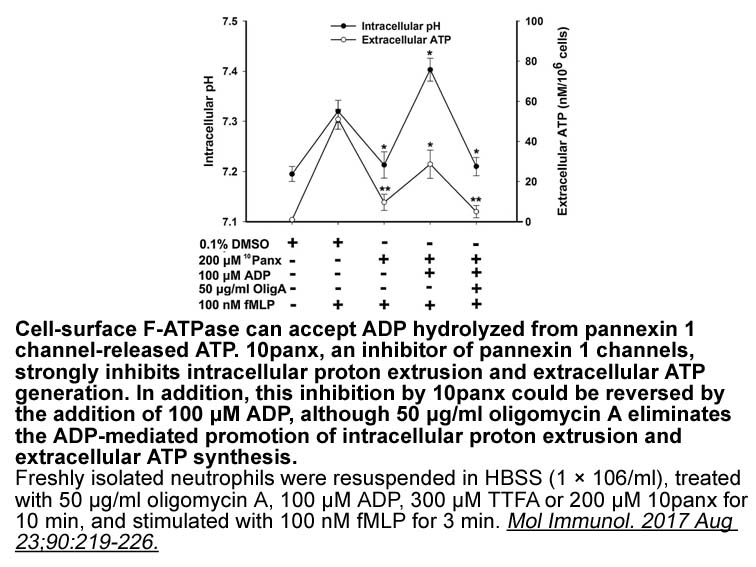
Results Discussion Cell-contact-mediated spread of HIV-1 has been estimated to be at least an order of magnitude more efficient compared to passive dissemination of particles through the extracellular milieu. Thus, this form of viral transmission can have significant effects on the pathogenesi
-
Some years ago it has been described that
2022-05-20
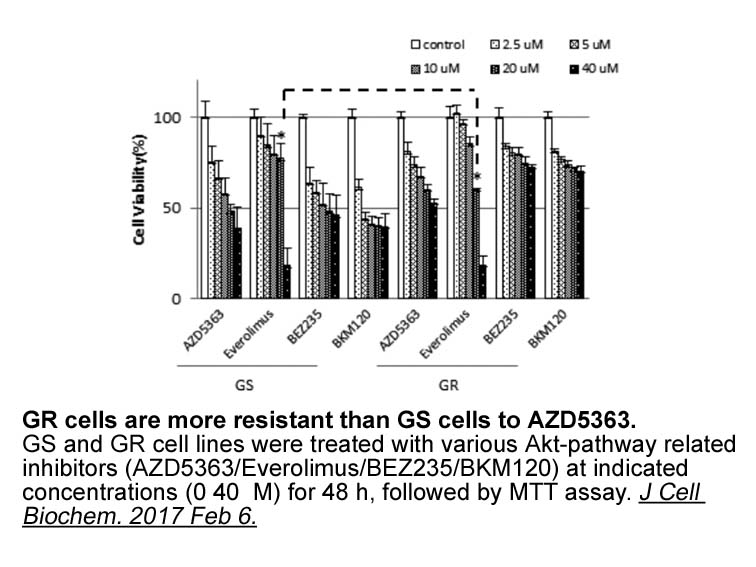
Some years ago, it has been described that CD45RA+ CD62L+ naïve CD4+ T SW033291 can be further differentiated into two distinct subpopulations by analysing their surface expression of CD31(Kimmig et al., 2002a; Kohler and Thiel, 2009; Kohler et al., 2005b). CD31+ thymicnaive CD4+ T cells are enrich
-
We suggest that the FRET
2022-05-20
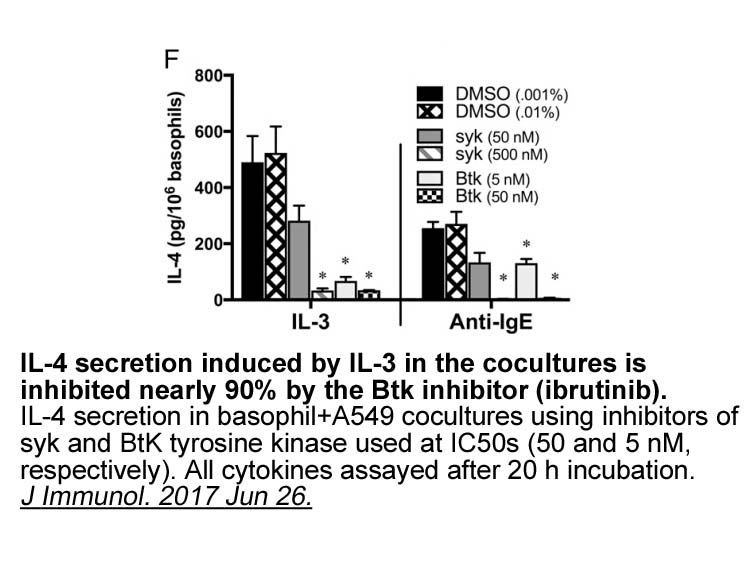
We suggest that the FRET enhancement observed when the modified mD1 protein containing Acd at position 28 was excited at 260nm (), may differ from the diminution in fluorescence observed following excitation at 280nm due to the excitation of different transitions in Trp (i.e., the L and L transition
-
br Hedgehog HH signaling plays an important role both during
2022-05-19
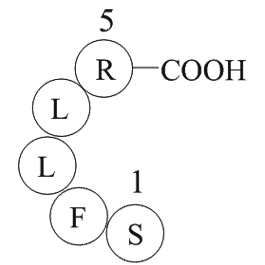
Hedgehog (HH) signaling plays an important role both during embryonic development and adult life. It is involved in the regulation of cell differentiation, cell proliferation and tissue polarity, as well as in the maintenance of stem cells, tissue repair, and regeneration (, ). Three ligands, Indi
-
In fact changes in mitochondrial dynamics directly
2022-05-19
In fact, changes in mitochondrial dynamics directly affects many things including cellular metabolism [127], mitochondrial mass and turnover [128], mitochondrial transport, and calcium buffering [129]. Nigrostriatal DA neurons seem to have a preferential susceptibility to loss of Mfn2 when compared
-
When tested in dog at mg kg showed
2022-05-19
When tested in dog at 20mg/kg, showed a reduction of 56% of Aβ42 in the cerebrospinal fluid (CSF) 8h post doing, comparable to that of (see ). Upon evaluation of Plerixafor 8HCl in a one week repeated dose study in dog, at 10 and 20mg/kg/day, no increase in liver enzyme levels (ALT or AST) was o
-
The GAL also modified HT system Millon
2022-05-19
The GAL(1–15) also modified 5-HT system (Millon et al., 2015). Using a rat medullary raphe-derived cell line RN33B, we observed that GAL(1–15) significantly decreased the 5-HT immunoreactivity in the RN33B fgf receptor inhibitor (p Conclusion All these data emphasized the role of GAL and its N-Te
-
Galanin was shown to play an important role
2022-05-19
Galanin was shown to play an important role in pain and pain processing [14] and the involvement of neuropeptides in the development of migraine is well established [[24], [25], [26]], however, so far it has not been examined whether systemic galanin levels correlate with migraine. Therefore, we use
-
To investigate the potential molecular mechanism of
2022-05-19
To investigate the potential molecular mechanism of FXR-mediated regulation of liver cancer cell proliferation, gene expression profiles were determined using Agilent arrays in SK-Hep-1-FXR and NC after treatment with the FXR agonist GW4064. The results indicate that mTOR and S6k are involved in div
-
Compounds that induce exocytosis in
2022-05-19
Compounds that induce exocytosis in cultured methysergide include Ca2+-dependent [14] or Ca2+-independent [15] mechanisms. Ca2+-dependent exocytosis releases soluble enzyme content from lysosomes [16] operating by increasing the cytosolic concentration of Ca2+[13] by recruiting extracellular Ca2+[1
-
br Materials and methods br Results br Discussion
2022-05-19
Materials and methods Results Discussion In this study, we demonstrated that, at the level of hREECs, blockade of the ETA receptor partially inhibited the effect of NPY on the secretion of ET-1. This suggests that the secreted ET-1 by NPY contributes, in part, to its own secretion via activ
-
br Acknowledgements This research was supported by the Natur
2022-05-19

Acknowledgements This research was supported by the Natural Sciences and Engineering Council of Canada (NSERC) Discovery Grant awarded to RGM. LMW was supported in part by fellowships from the University of Regina and the Government of Saskatchewan Fish and Wildlife Development Fund (FWDF). We wo
-
Biochemical and genetic studies indicate that the endosomal
2022-05-19
Biochemical and genetic studies indicate that the endosomal sorting complex required for transport (ESCRT) machinery is crucial for Hh exovesicle packaging and morphogen gradient function 39., 43., 44.. In vertebrates, ESCRT proteins promote the release of Shh exovesicles to maintain progenitor cell
-
Studies with GSNOR knockout mice reported decreased CD cells
2022-05-18
Studies with GSNOR knockout mice reported decreased CD4+ pkc inhibitors and increased CD19+ cells (B-cell) in the blood [31] as well as demyelination, neurodegeneration, and neuropathic pain [29]. To understand the basis of these differences in immune function of GSNOR knockout mice and GSNO treated
-
We previously evaluated the immuno modulatory efficacy of GS
2022-05-18
We previously evaluated the immuno-modulatory efficacy of GSNO in different EAE models and reported prophylactic and therapeutic efficacy of GSNO against the clinical disease of EAE [22], [36]. GSNO inhibited the IL-6-induced STAT3 activation (Tyr705 phosphorylation) by S-nitrosylation of the STAT3
16090 records 455/1073 page Previous Next First page 上5页 451452453454455 下5页 Last page